Triggers That May Lead to an Episode of Drug Abuse/use Can Be
| | 9 sources
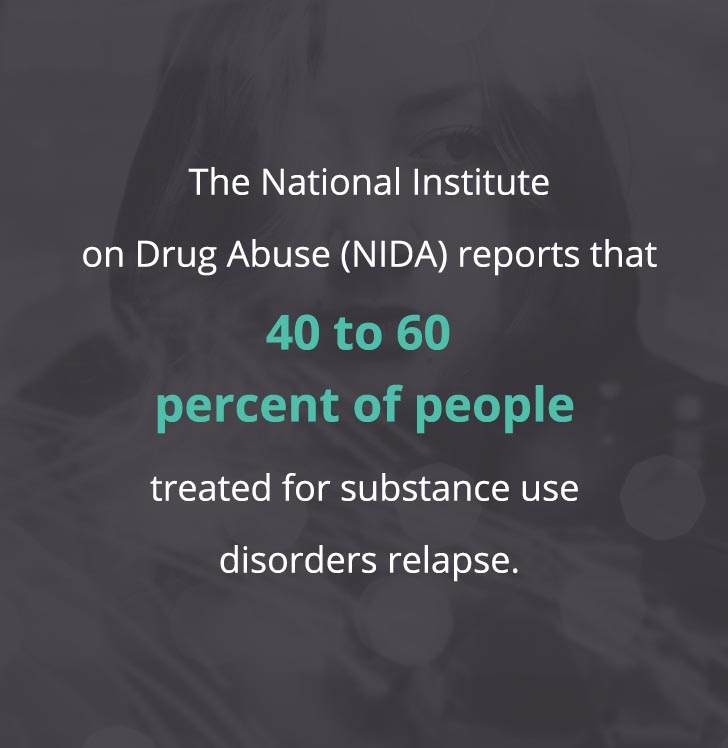
Triggers are social, ecology or emotional situations that remind people in recovery of their past drug or alcohol use. These cues bring about urges that may pb to a relapse. While triggers do not force a person to apply drugs, they increase the likelihood of drug use. The National Found on Drug Abuse (NIDA) reports that 40 to 60 percent of people treated for substance use disorders relapse.
Long-term drug use creates an association in the brain between daily routines and drug experiences. Individuals may suffer from uncontrollable drug or alcohol cravings when exposed to certain cues. The cravings act equally a reflex to external or internal triggers, and this response can even affect individuals who have abstained from drugs or booze for a long fourth dimension.
Allison Walsh of Advanced Recovery Systems explains what triggers are, how you tin identify triggers and why it's of import to acquire to cope with triggers.
External Triggers
External triggers are people, places, activities and objects that elicit thoughts or cravings associated with substance use. Individuals in recovery can stay away from the dangers of external triggers by developing activeness plans to avoid triggers that remind them of by drug use. They should as well be prepared to fight thoughts and cravings when they are in triggering situations.
A study past NIDA discovered that cocaine-related images subconsciously prompted the emotional centers of the brains of one-time users. These underlying stimuli and cues ready off a rapid activation of the circuits associated with substance cravings.
The research maintained that subconscious cues are dangerous because they reinforce the patient's want to restart using drugs without them existence aware of it. Researchers highlighted the importance of fugitive the people, places and things that remind patients of their former lifestyle.
People
People closest to the private may set off cravings that eventually atomic number 82 to a relapse. It is perilous for a person in recovery to be effectually substance-using friends and family. Even peers who abstain from illicit drugs can be dangerous. Offering alcohol to a old addict may trigger feelings that urge the private to use drugs.
- Sometime drug dealers
- Friends
- Co-workers
- Employers
- Family members
- Spouses or partners
- Neighbors
Friends and family may not understand the consequences of negative behaviors toward people in recovery. These behaviors can brand the individuals feel alienated and push them toward substance employ.
Places
High-risk places remind former drug users of the times they engaged in substance use. Walking or driving through places where they used to drink or consume drugs can spark a retention connected to drug or alcohol employ.
- Neighborhoods
- A friend's home
- Bars and clubs
- Hotels
- Worksites
- Concerts
- A throughway leave
- Bathrooms
- Quondam drug-stash locations
- Schools
- Downtown
A person can detect culling routes to avert high-risk places, such as places where they used to meet their dealers or bars where they used to rampage beverage.
Things
Objects in an individual'due south everyday life may induce a peckish. Cues such as spoons can trigger memories of drug utilize in one-time heroin users without them being aware.
- Paraphernalia
- Furniture
- Magazines
- Movies
- Television
- Cash
- Credit cards
- ATMs
- Empty pill bottles
A NIDA study maintains that exposure to drug-related objects may influence a former addict's behavior. The encephalon registers these stimuli and processes them in the same areas involved in drug-seeking behavior.
Situations
People at risk of a relapse should avert stressful situations that are probable to push them to employ drugs and alcohol.
While holidays are a time of commemoration for some, they may be a struggle for people in recovery. Holiday parties involving social drinking may exist tricky. Family and friends frequently tempt those in recovery to swallow alcohol because they are under the misconception that 1 deviation from the handling plan will non be detrimental.
| Events | Behaviors Activities |
|---|---|
| Meeting new people | Listening to a particular music genre |
| Recovery grouping meetings | Going out to dance or swallow |
| Parties | Hanging out with friends or substance-using peers |
| Payday | Driving |
| Calls from creditors | After paying bills |
| Before, during and subsequently piece of work | Before or during a date |
| Going out | Lone in the house |
| Before, during and after sex | Later on an argument |
| Anniversaries | Talking on the phone |
| Holidays | While eating lunch or dinner |
| Family gatherings |
Patients in rehab may consider skipping treatment sessions or support group meetings to spend time with their friends and family. A intermission in the routine may exit periods of isolation where patients may exist inclined to utilize substances.
Internal Triggers
Internal triggers are more challenging to manage than external triggers. They involve feelings, thoughts or emotions formerly associated with substance abuse. When internal triggers arise, they can lead to questionable behaviors that deter recovery progress. Exposure to these cues may cause individuals to require and use substances.
A study of rats by the University of Michigan plant that the rats largely preferred rewards that triggered the brain'southward amygdala, part of the limbic arrangement that produces emotions. The researchers too discovered that the rats were inclined to work harder to obtain the reward that triggered the amygdala than the aforementioned reward that did non trigger any emotion in the brain.
Researchers deduced that the amygdala played an important role in producing focused and exclusive desire, like to drug addiction. Internal triggers deed in reverse, associating these signals to the substances that elicit them.
Emotions that tin act as internal triggers may include:
- Fear
- Anxiety
- Guilt
- Irritation
- Overconfidence
- Anger
- Detest
- Jealousy
- Shame
- Depression
- Loneliness
- Feeling criticized, inadequate or overwhelmed
- Boredom
- Insecurity
- Nervousness
- Sadness
- Embarrassment
- Loneliness
- Pressure level
- Tiredness
- Frustration
- Neglect
- Relaxation
- Celebratory feelings
- Excitement
- Happiness
- Passion
- Strength
- Conviction
- Exhaustion
- Feeling "normal"
- Sexual arousal
- How do I feel before using drugs or alcohol?
- How exercise I desire to experience before using substances?
- In the last calendar week, how did I experience when I used or wanted to employ substances?
It'south important for people in recovery to be enlightened of the internal triggers they struggle with the virtually and take a plan in identify to seek back up when needed.
Stress Increases Vulnerability to Triggers and Relapse
A written report from Marquette University pointed out that stress rendered people in recovery more vulnerable to other relapse triggers. Researchers followed the cocaine utilize patterns of stressed and unstressed rats and used a depression dose of cocaine as a trigger. The stressed rats' responses to the trigger mirrored those of people during relapse.
In rats and humans, the hormone corticosterone increases the level of dopamine, a brain chemical that plays a major role in reward-seeking beliefs, in the brain in response to stress. Cocaine and several other illicit drugs besides boost levels of dopamine. The Marquette researchers stated a stressed animal previously exposed to cocaine will require the drug because the dopamine surge from cocaine trumps the release of stress-related dopamine.
After removing the corticosterone-producing glands from the rats, researchers observed a lack of relapse behavior afterwards triggering them with low doses of cocaine. In dissimilarity, when they increased the corticosterone levels, unstressed rats showed relapse behaviors when triggered.
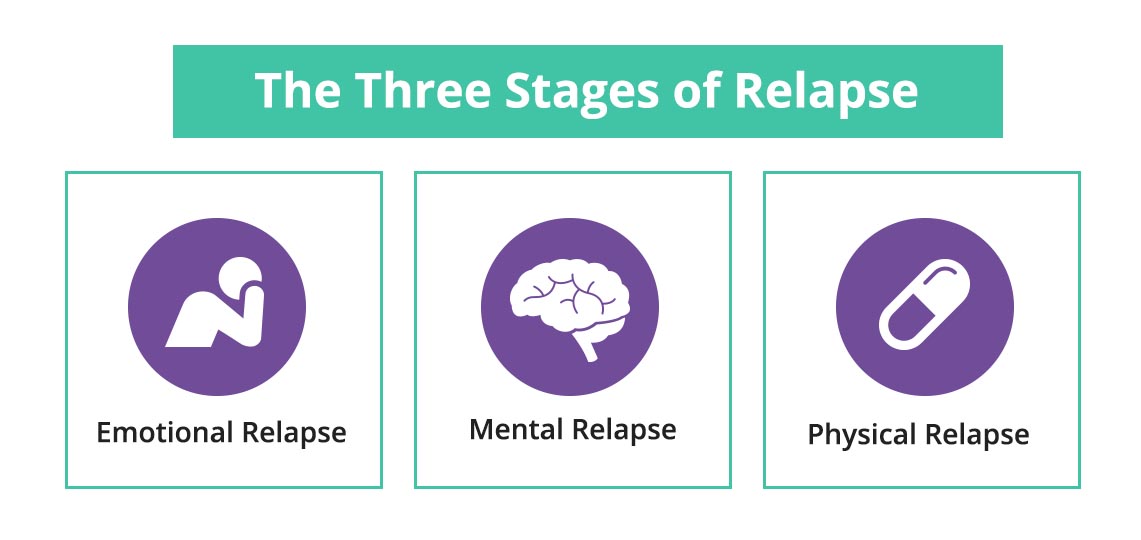
The Stages of Relapse
Triggers for addictive beliefs practise not initiate immediate use.
When people in recovery succumb to triggers, their brains create reasons to use substances despite knowing that they must remain abstinent. This ongoing fight increases their vulnerability to cravings, which may result in a potential relapse.
Emotional Relapse
Former drug or alcohol users are in deprival during emotional relapse, but they do non have thoughts of using. They are ashamed of the last time they relapsed and may have developed negative behaviors to cope with their thoughts. This state of mind is dangerous because it encourages bad health practices that can eventually lead to a total-blown relapse.
- Property back emotions
- Isolation
- Avoiding AA or NA meetings
- Existence reserved at meetings
- Focusing on other people's issues
- Bad eating and sleeping habits
During therapy for people experiencing emotional relapse, patients are encouraged to identify their denial and focus on cocky-care.
Mental Relapse
Mental relapse, or relapse justification, is the continuous fight between wanting to utilise and knowing yous should not use. Individuals often underestimate the dangers of situations and autumn into the trap of single-fourth dimension utilise. They give themselves permission to utilise substances in a controlled style, but the frequency of use generally increases until they fully relapse.
- Drug or alcohol cravings
- Thoughts about people, places and things associated with sometime utilise
- Glamorizing former utilise of substances
- Bargaining
- Lying
- Plotting to amend control substance utilise
- Actively seeking relapse opportunities
- Planning a relapse
Education on coping skills can aid people manage thoughts of using.
Physical Relapse
A physical relapse occurs when someone starts using again. Information technology is the culmination of an emotional relapse and a mental relapse. Physical relapses are one of the most challenging stages of relapse to overcome. In many cases, users cave to drug use during a window of opportunity and falsely believe it will cause no harm.
Identifying Triggers
External triggers are easier to identify and manage than internal ones. Substance abuse treatment aims to help individuals recognize the early on alert signs of relapse and develop healthy coping skills to thwart a potential relapse.
Managing External Triggers
Triggers that happen outside of the private are not necessarily beyond control. At that place are multiple reminders of substance utilise in a former drug user's life, including people, places and things. Request the right questions and taking the correct steps tin enable people in recovery to healthily transition to their normal life without risking a relapse.
Recovering individuals can bear out personal exercises where they brand a list of the people, places and things that remind them of their substance-using life. Asking certain questions about external triggers can help forestall relapse.
Some of the questions tin include:
- Do you think an upcoming upshot or state of affairs will prompt substance cravings?
- Are you currently in a situation that triggers cravings? Tin can you leave?
- Are you stuck in a state of affairs that forces you to think almost substance use?
- Were you recently in a state of affairs that sparked a thought about using substances?
- What drugs exercise yous have effectually your house or in your automobile?
- What paraphernalia did y'all utilize with your drugs?
- What objects did y'all use when y'all took drugs and consumed alcohol?
- Do you take a not-using family unit member or friend who can purge your home from objects that remind you of your former life?
- How soon can you adjust for your family or friend to rid your dwelling house of drugs and related objects?
- With whom did you use substances?
- Who were your quondam suppliers?
- Do y'all take their telephone number saved?
- What steps can y'all take to terminate contact with your dealers and substance-using peers?
- Practice yous take family members or lovers who are substance users?
- How should you arroyo the state of affairs if they are still using?
- What neighborhoods, streets, houses or other locations exercise you associate with drugs or alcohol employ?
- Do you encounter these daily, while going to work, on a jog or on the way to handling?
- Tin can yous avert high-hazard areas?
- How practice you program to avoid these areas?
- What can you say to refuse drugs and go out the situation when someone pressures you?
Managing Internal Triggers
Individuals develop new thoughts, feelings and behaviors while using substances. These may include shutting family off, denying bug or justifying substance employ. Healthier practices need to supersede these negative internal processes in gild to help people succeed in their path to a substance-free life.
Users in recovery can ask themselves some questions to help them understand their internal thoughts and feelings.
- How did I shut off my feelings?
- What are the benefits and risks of shutting off from friends and family?
- How tin I modify this?
- How did I change my thoughts to avoid reality?
- Did fugitive reality assist?
- How can I change that behavior?
- Exercise I engage in specific behaviors to avoid difficult circumstances?
- What are the advantages and disadvantages of these behaviors?
- What types of behaviors would be healthier?
The before people in recovery can identify and successfully answer to triggers, the greater their chances of prolonged abstinence.
Medical Disclaimer: DrugRehab.com aims to better the quality of life for people struggling with a substance use or mental health disorder with fact-based content most the nature of behavioral health conditions, treatment options and their related outcomes. Nosotros publish textile that is researched, cited, edited and reviewed by licensed medical professionals. The information we provide is non intended to be a substitute for professional medical communication, diagnosis or handling. It should not exist used in identify of the communication of your physician or other qualified healthcare provider.
Author

Writer, DrugRehab.com
Sonia Tagliareni is a author and researcher for DrugRehab.com. She is passionate about helping people. She started her professional writing career in 2022 and has since written for the finance, engineering, lifestyle and entertainment industry. Sonia holds a bachelor's degree from the Florida Establish of Technology.
View Sources
- Boston Center for Treatment Development and Training. (n.d.). Module 4: Urges. Retrieved from http://www.mass.gov/eohhs/docs/dph/substance-abuse/sbirt/bt-transmission-module4.pdf
- National Institutes of Health. (1999). Handling for Stimulant Use Disorders. Retrieved from http://world wide web.ncbi.nlm.nih.gov/books/NBK64332/#A58353
- National Establish on Drug Abuse. (2014, July). Treatment and Recovery. Retrieved from https://www.drugabuse.gov/publications/drugs-brains-beliefs-science-addiction/treatment-recovery
- National Institute on Drug Corruption. (2014, July). Drugs and the Brain. Retrieved from https://www.drugabuse.gov/publications/drugs-brains-behavior-scientific discipline-habit/drugs-brain
- National Institute on Drug Abuse. (2008, February 22). MRIs Tin can Find Signals that Trigger Drug Cravings. Retrieved from https://www.drugabuse.gov/news-events/podcasts/2008/02/mris-tin-find-signals-trigger-drug-cravings
- Wadley, J. (2014, December 10). U-M report pinpoints role of brain that triggers addiction. Retrieved from https://record.umich.edu/articles/u-grand-report-pinpoints-role-brain-triggers-addiction
- National Constitute on Drug Abuse. (2015, June 4). Stress Hormone Sets the Phase for Relapse to Cocaine Use. Retrieved from https://www.drugabuse.gov/news-events/nida-notes/2015/06/stress-hormone-sets-stage-relapse-to-cocaine-use
- U.Southward. Section of Wellness and Human Services. (n.d.). Matrix Intensive Outpatient Treatment for People With Stimulant Employ Disorders. Retrieved from http://www.ct.gov/dmhas/lib/dmhas/pgs/PGIntegratedMatrixClientHandbook.pdf
- Melemis, S.Yard. (2015, September iii). Relapse Prevention and the Five Rules of Recovery. Retrieved from http://www.ncbi.nlm.nih.gov/pmc/articles/PMC4553654/
Source: https://www.drugrehab.com/recovery/triggers/
0 Response to "Triggers That May Lead to an Episode of Drug Abuse/use Can Be"
Post a Comment